
Equine Respiratory Health:
Prevention and Care
Respiratory health is vital for your horse’s performance and well-being. Whether in the warm climates of Phoenix or cooler regions, seasonal changes can introduce challenges that affect your horse’s breathing. Understanding and addressing these issues promptly can make a significant difference in your horse’s quality of life.
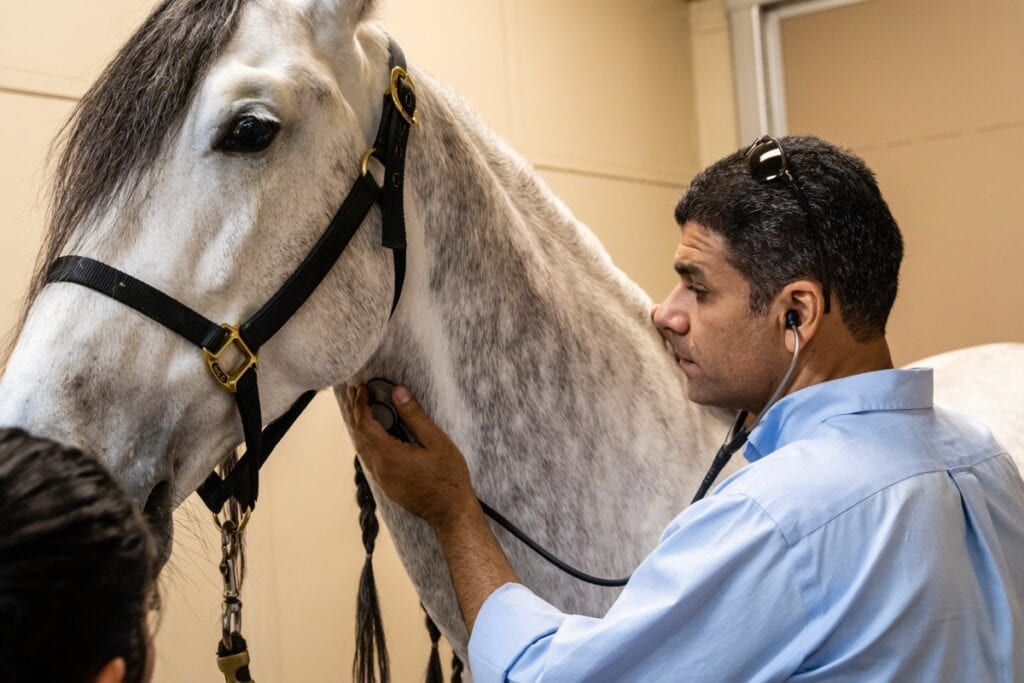
Horses have a unique respiratory system that requires efficient airflow to meet their oxygen demands, especially during exercise. Any compromise can lead to decreased performance and health issues.
Be alert to signs such as:
Early detection allows for timely intervention, preventing more severe complications.
Several conditions can affect equine respiratory health:
Veterinarians use various tools to assess respiratory health:
Endoscopy: Visual examination of the airways.
Radiography and Ultrasound: Imaging to detect structural issues.
Pulmonary Function Testing: Measures lung capacity and airflow.
These diagnostics help in formulating effective treatment plans.

Dynamic Endoscopy is performed while the horse is exercising under saddle, providing real-time visualization of the airway during work.
Managing respiratory conditions involves:
Consult with your veterinarian to determine the best course of action for your horse.
Prevention is key to maintaining respiratory health:
Implementing these practices can significantly reduce the risk of respiratory issues.
Maintaining your horse’s respiratory health is essential for their overall well-being and performance. By recognizing early signs, seeking prompt veterinary care, and implementing preventive measures, you can ensure your horse breathes easy year-round.
For expert advice and care, contact Cave Creek Equine™ Sports Medicine & Surgery at 623-581-5508.